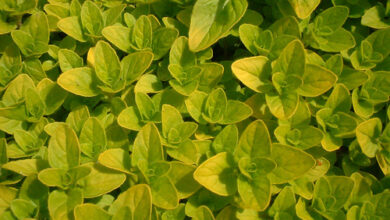
The term “biophilic design” has moved from architectural theory into mainstream interior design — but with popularity comes dilution. Today, slapping a fiddle-leaf fig in the corner of an open-plan office and calling it biophilic is as common as it is insufficient. True biophilic design is grounded in a specific body of evidence about how the built environment affects human psychology, and its principles extend far beyond adding plants. This guide explores the science of what actually works — and how to apply it in workspaces of any size or budget.
The Attention Restoration Theory: Why Nature Restores Focus
Attention Restoration Theory (ART), developed by Rachel and Stephen Kaplan at the University of Michigan in the 1980s and since extensively validated, proposes that natural environments have a distinctive capacity to restore directed attentional capacity. Unlike urban environments — which demand constant vigilance and executive control to navigate safely — natural environments engage a form of “soft fascination” that allows the prefrontal cortex to rest while perceptual processing continues passively. This distinction between directed attention (effortful, depletable) and involuntary attention (effortless, restorative) is central to understanding why biophilic exposure reduces cognitive fatigue.
A landmark study by the University of Michigan found that 50-minute walks in natural environments — compared to urban environments — produced significant improvements in working memory, attention, and cognitive flexibility. More relevantly for workspace design: even passive exposure to nature views produced meaningful cognitive restoration effects, with participants who had window views of nature scoring 23% higher on directed attention tasks than those facing blank walls. This single finding has substantial implications for workspace layout and desk positioning.
The 14 Patterns of Biophilic Design: Beyond Plants
Terrapin Bright Green’s influential 2014 report “14 Patterns of Biophilic Design” remains the most comprehensive framework for applying biophilic principles systematically. It organizes biophilic elements into three categories: Nature in the Space (direct contact with plants, water, animals, breezes, and natural light), Nature of the Space (spatial configurations that evoke evolutionary shelter — prospect and refuge, mystery, and peril), and Natural Analogues (materials, textures, and patterns that reference nature without being nature itself, such as natural wood grain, stone, and fractal geometry in art).
The research-backed hierarchy of impact, for most office environments, prioritizes daylight and views first, followed by natural ventilation, then plant integration, acoustic management using natural sound masking, and finally materiality and texture. A workspace that addresses all five at even a modest level outperforms one that invests heavily in plants alone while ignoring daylight — yet the majority of corporate biophilic retrofits do exactly that, because plants are more visible, affordable, and marketable than structural daylight solutions.
Fractal Geometry and the Visual Preference for Nature
One of the most fascinating discoveries in biophilic research is that humans show a robust preference for fractal geometric patterns — self-similar patterns that repeat across scales — consistent with the fractal dimensionality of natural forms like trees, coastlines, and clouds. Physicist Richard Taylor at the University of Oregon found that fractal patterns with a fractal dimension (D) between 1.3 and 1.5 — the range most commonly observed in natural landscapes — consistently elicit the greatest stress reduction and positive affect responses, as measured by EEG alpha wave activity and skin conductance.
This has practical design implications: artworks, wall textures, ceiling patterns, and even flooring that incorporate fractal geometry within the optimal range produce measurable psychological benefits without requiring any living elements. It is one of the most cost-effective biophilic interventions for environments where living plants or water features are impractical — such as server rooms, hospitals, or windowless offices.
Acoustics: The Most Overlooked Biophilic Variable
Open-plan offices are the dominant workspace format globally — and they are also associated with 66% higher rates of sick days, significantly reduced concentration, and lower job satisfaction compared to private office environments, according to a 2018 study in the Scandinavian Journal of Work, Environment and Health. The primary culprit is irrelevant speech: overhearing others’ conversations imposes a mandatory phonological processing load on the working memory system that meaningfully degrades reading comprehension and numerical reasoning.
Biophilic acoustic design addresses this through natural sound masking — using recordings of flowing water, rainfall, or birdsong to mask speech frequencies without adding cognitive load. Research from the Royal College of Art found that natural sound masking reduced perceived intrusiveness of speech noise by 41% compared to silence, and by 26% compared to conventional white noise — while simultaneously improving mood ratings. Strategic placement of water features, living walls with water circulation, and high-quality ambient nature soundscapes represent one of the highest-return biophilic investments for open-plan workspaces.
Implementing Biophilic Design on Any Budget
The evidence does not require a full architectural renovation. The most impactful immediate interventions, ranked by evidence base and cost-effectiveness, are: repositioning desks to maximize proximity to natural light and window views; introducing living plants at densities of at least one plant per 9 square meters (below which air-quality benefits are negligible); installing a nature soundscape system or desktop water fountain; replacing synthetic materials with natural wood, stone, or linen where furniture replacement is planned; and incorporating fractal-patterned artwork at eye level in high-traffic zones. These interventions, implemented together, produce measurable improvements in reported wellbeing, absenteeism rates, and self-rated productivity — without structural renovation or large capital expenditure. In biophilic design, as in ecology, diversity of interventions compounds their individual effects.